I find it incomprehensible how institutions like schoools, hospitals and nursing homes have become the lowest rung of importance in our industrialized food system. I don't know if any of you have had the occasion of late to experience any of the foods served at any of these institutions but the situation is atrocious.
Many of you know that I have spent some time working with children and doing cooking demos at schools trying to educate kids on the benefits of healthy eating. Part of that was inspired by the likes of Jamie Oliver's Food Revolution, part by the White House Let's Move initiative, but basically I was motivated to try to connect with kids and show them that healthy doesn't necessarily mean yucky. Believe it or not, kids are much more open minded than we think they are. If you give them the opportunity to try new things, they are quite receptive. That being said, when you see what they are actually being fed by school cafeterias, it is incredibly disheartening. All the education and encouragement in the world won't be worth a darn thing if they continue serving the slop they do in schools.
Many kids in this country only have 2 meals a day and they are the 2 that they get for free at school. When all they are being fed is fried, fatty, white starches and processed, pre-packaged frankenfoods it is no wonder that we are suffering from an epidemic of obesity amongst school aged children. It is absolutely disgusting.
However, if you think schools are bad, nursing homes are even worse. About a month and a half ago my grandmother had to be admitted to a nursing home and I frequently had occasion to visit her during meal times. A sampling of the "food" she has been fed that supposedly meets some kind of minimal nutritional requirement includes items like cheetos, white bread, mashed potatoes from a box, chocolate cookies, chocolate or strawberry milk, sloppy joes and mystery meat I have yet to identify as having come from any particular animal. While I understand there are huge costs associated with running a nursing facility, many older individuals suffer from numerous dietary restrictions associated with everything from diabetes to heart problems to diverticulitis to acid reflux. You can't tell me that these foods qualify as healthy for those individuals. Heck, I don't think they qualify as healthy for even a younger individual without any health problems.
And last week, when I was in the hospital after what I'd call moderately invasive surgery, the items offered to me for meals included hamburgers, pizza, grilled cheese sandwiches, cake, cookies, flavored milk, veggies with ranch dressing and JELLO. When I asked the gentleman if they had yogurt, I was promptly told that never in the years that he has been working at that hospital has anyone ever asked for or been served yogurt. I was mortified.
What has to occur in the history of an industrialized food system that places such little value on the most vulnerable members of the population? I understand the food lobby is huge and I get that food manufacturers are being paid government subsidies to provide these institutions with cheap food in abundance, but why do we stand for it?? Are we so desensitized to what good food is that we actually believe that this kind of food is healthy or even remotely nutritious??
It makes sense that kids are not standing up for something better because they don't know any better, but their parents should be angered by what they are being fed. And the adult children of those who are in nursing homes should be even more insensed by what their parents are being fed. What's more is that any patient who has ever been in a hospital should be outraged by the offerings they are being given when they are at their most fragile. I don't know about you but for me, it's not ok. Something has to be done. I don't believe that the system cannot be changed by a few people. If one person gets another person to speak up against this kind of atrocity, eventually we'll have an army of folks speaking out against what I think is the deliberate poisoning of a vast segment of our population. We have to realize at some point that what we put into our bodies in the form of food is as important if not more important than any kind of medication you might be prescribed. We have to get back to a society where food is real, not synthetic. Respected, not abused. It's time for us all to wake up and smell the coffee before it's too late.
Thursday, May 24, 2012


Thursday, May 3, 2012
Dear Mr. Comedien
Dear Mr. Comedian
A couple of weeks ago we were watching comedian Bill Engvall
do stand-up and he came to a section where he was ranting about his awful
experience at a bed and breakfast. While obviously he was going for a laugh, he
proceeded to outline a list of stereotypes about bed and breakfasts that we as
innkeepers fight to debunk constantly. As a result, I felt compelled to write a
letter to him. Here it is. Enjoy.
Dear Mr. Bill Engvall.
My husband and I are big fans. We happened to catch one of
your stand-up routines recently where you were describing your terrible
experience at a bed and breakfast your wife dragged you to. As innkeepers, we
felt the need to share a few things with you about bnb’s that you may have not
realized. Gone are the days of the home stays where you are surrounded by lace
and “antiques” that are more what I’d call old stuff rather than something
expensive and historical. Here to stay are properties that want to compete with
the top luxury hotels in the world, pampering you in every possible way they
can think of. High tech amenities like wi-fi, satellite tv, vast movie libraries
and innkeepers who Tweet, Post on Facebook, Pin and make cool videos on Youtube
are the new norm. But let me be more specific and address some of your unique
qualms.
First, shared bathrooms. While shared bathrooms were common
in bnb’s when they first hit the scene, most American bnb’s know that people do
not enjoy sharing and most have en suite private baths. Not only that, many
offer upgrades like Jacuzzi tubs, heated floors/towel racks, signature spa
quality toiletries, fluffy robes, soft water and super fluffy towels. That way
you don’t have to worry about who is going to “smell” after you and you won’t
have to worry about running into anyone in the hall in the middle of the night
in your skivvies.
Second, hard mattresses and uncomfortable bedding. I can
assure you that the bedding/mattress industry for bnb’s is big business. Not a
conference goes by where numerous vendors don’t appear with the highest quality
sheets and newest upgrades in pillows and mattresses. In fact, most bnb’s have
upgraded pillow top mattresses that would rival any high end hotel. Sheets are
so satiny it is like sleeping on an Indian sari and pillows have been designed
to be snore resistant, sweat resistant, crick in the neck resistant, stain
resistant, bug resistant and practically perfect in every way like Mary
Poppins.
Third, frou frou breakfasts that you have to eat with a
bunch of other people you don’t know. Now, as a bnb that specializes in gourmet
food, I’m not going to feed you foams on a cloud of egg dust with essence of
bacon. I’m going to feed you a hearty yet elegant breakfast that you will feel
satiated by and will fuel you for a day of whatever it is you might want to do.
And while you can opt to enjoy a meal with others at the bnb, if you make it
known you are interested in dining privately, most inns will make it happen. We
don’t require you to become best friends with the couple in the room next door
as part of the inn’s rules.
Finally, area attractions that are less than attractive.
Believe it or not, if you inquire about activities with the innkeepers of any
bnb, they will give you a long list of many different kinds of activities
geared toward almost any taste. Mancations are big business and if you are
looking for fishing, beer, golf or something that doesn’t involve antiques and
girly shopping, it’s out there no problem. You just have to ask.
So my point is give bnb’s a chance. I know that in the past
things were a little different. But to quote the Professional Association of
Innkeepers International bnb’s are the “Better Way to Stay.” Each is unique.
Exploring them is exciting and an opportunity to experience intimately the best
there is to see of any given area. So please Mr. Engvall, please come stay with
us. Let us pamper you and change your mind for good about how great bnb’s can
really be. And maybe if we succeed we could score a couple of tix to your next
show? Wink wink.
Sincerely,
Monika and Jeff Sudakov, Innkeepers
Chestnut Street Inn

Monday, April 16, 2012
Happy National Eggs Benedict Day!!!
Today is National Eggs Benedict Day. Eggs Benedict is definitely one of my favorite breakfasts. I happen to love my eggs poached and still runny. The creamy yolks to quote the movie Julie and Julia are like "cheese sauce." I do get bored with the traditional version however so I started messing around with the recipe and came up with the following. I served it about a month or so ago. The only thing traditional about it was the poached eggs and the Hollandaise Sauce.
A quick note about poaching eggs. You can poach them the old fashioned way in a pot of gently simmering water with a hint of vinegar in it, but that can be really tricky and very time consuming. My preference is to use an egg poaching pan, which you can get at most high end kitchen supply stores. It makes perfect little poached eggs that are all uniform in shape and size. To keep eggs warm if you plan on doing a bunch of them, place the poached eggs in a bowl of warm water until you are ready to serve. This keeps them warm, but stops the cooking process so they don't get overdone.
Also, I'm a Hollandaise Sauce snob. There is no place for a packaged mix of Hollandaise in my book, especially because many of the packaged mixes are not gluten free and have numerous fillers in them including a ton of sodium. It is extremely easy to make and nothing replaces the real thing. I use good quality cage free eggs that I know are fresh so there is no concern about salmonella.
Eggs Benedict a la Crab Louie
Crab Louie is a sauce made with crab, asparagus and Hollandaise that often goes over a filet or a chicken breast. In this case I decided to put it over my poached eggs for a new and improved version of Eggs Benedict. If you do not like crab or have an allergy, just do the roasted asparagus with the Hollandaise and skip the crab part. Instead of english muffins I use home baked rolls which are much heartier and absorb the creamy eggs and sauce really well.
Rolls
Yields: 10 Servings
3 1/2 cups All Purpose Flour
6 Tbl Extra Virgin Olive Oil
1 tsp Kosher Salt
1/2 cup plus 1 tsp granulated Sugar
2 tsps Yeast
1 1/2 cups water (110 degrees)
Place yeast, 1 tsp sugar and lukewarm water in a large bowl. Make sure the water is at the proper temperature or the yeast will not be activated properly. Allow to stand in a warm place for 10 minutes or until the yeast becomes frothy. Add salt, sugar, oil and flour and knead until the dough is smooth and not sticky. Cover with plastic wrap and allow to proof for 2 hours in a warm place. Grease a baking sheet with cooking spray or more oil and divide the dough into 10 equally sized rolls. Allow to proof for an additional hour. Preheat oven to 375 degrees. Bake for 20 mins. Allow to cool completely before using.
Hollandaise Sauce
Yields: Approx. 8 Servings
3 Egg Yolks
8 Tbl Unsalted Butter, Melted
Pinch Kosher Salt
Pinch Freshly Grated Nutmeg
Pinch Freshly Ground Pepper
1 tbl Lemon Juice
1 tbl water
Place egg yolks, water, lemon juice, salt, pepper and nutmeg in a large measuring cup. Puree with an immersion blender. Slowly add hot melted butter, pureeing with immersion blender until the sauce is light golden yellow and thick. If sauce begins to separate, simply reblend.
Asparagus
Yields: Approx. 8 Servings
1 lb asparagus, trimmed
Kosher Salt and Freshly Ground Pepper
2 tbl White Truffle Oil
Place asparagus on baking sheet and drizzle with oil. Season liberally with salt and pepper. Toss to coat evenly. Place in a 375 degree oven for approx. 15 mins or until the asparagus are just cooked through, but still crisp.
To Assemble:
Yields: 8 Servings
8 Rolls, halved and toasted (I cut off the very top of the roll to make it level so it doesn't tip over)
1 lb roasted asparagus
8 oz lump crab meat (You can get this in a can or in vacuum sealed pouches), room temperature
4 large beefsteak tomatoes, cut into 16 thick slices
1 batch Hollandaise Sauce
16 Poached Farm Fresh Eggs
Place one roll on each plate. Top each half with tomato slice, then asparagus, then poached eggs, then garnish with crab meat and finally a dollop of Hollandaise sauce. Garnish with a dash of Paprika. Serve with fruit, bacon or sausage and/or greens tossed in a light vinaigrette.

A quick note about poaching eggs. You can poach them the old fashioned way in a pot of gently simmering water with a hint of vinegar in it, but that can be really tricky and very time consuming. My preference is to use an egg poaching pan, which you can get at most high end kitchen supply stores. It makes perfect little poached eggs that are all uniform in shape and size. To keep eggs warm if you plan on doing a bunch of them, place the poached eggs in a bowl of warm water until you are ready to serve. This keeps them warm, but stops the cooking process so they don't get overdone.
Also, I'm a Hollandaise Sauce snob. There is no place for a packaged mix of Hollandaise in my book, especially because many of the packaged mixes are not gluten free and have numerous fillers in them including a ton of sodium. It is extremely easy to make and nothing replaces the real thing. I use good quality cage free eggs that I know are fresh so there is no concern about salmonella.
Eggs Benedict a la Crab Louie
Crab Louie is a sauce made with crab, asparagus and Hollandaise that often goes over a filet or a chicken breast. In this case I decided to put it over my poached eggs for a new and improved version of Eggs Benedict. If you do not like crab or have an allergy, just do the roasted asparagus with the Hollandaise and skip the crab part. Instead of english muffins I use home baked rolls which are much heartier and absorb the creamy eggs and sauce really well.
Rolls
Yields: 10 Servings
3 1/2 cups All Purpose Flour
6 Tbl Extra Virgin Olive Oil
1 tsp Kosher Salt
1/2 cup plus 1 tsp granulated Sugar
2 tsps Yeast
1 1/2 cups water (110 degrees)
Place yeast, 1 tsp sugar and lukewarm water in a large bowl. Make sure the water is at the proper temperature or the yeast will not be activated properly. Allow to stand in a warm place for 10 minutes or until the yeast becomes frothy. Add salt, sugar, oil and flour and knead until the dough is smooth and not sticky. Cover with plastic wrap and allow to proof for 2 hours in a warm place. Grease a baking sheet with cooking spray or more oil and divide the dough into 10 equally sized rolls. Allow to proof for an additional hour. Preheat oven to 375 degrees. Bake for 20 mins. Allow to cool completely before using.
Hollandaise Sauce
Yields: Approx. 8 Servings
3 Egg Yolks
8 Tbl Unsalted Butter, Melted
Pinch Kosher Salt
Pinch Freshly Grated Nutmeg
Pinch Freshly Ground Pepper
1 tbl Lemon Juice
1 tbl water
Place egg yolks, water, lemon juice, salt, pepper and nutmeg in a large measuring cup. Puree with an immersion blender. Slowly add hot melted butter, pureeing with immersion blender until the sauce is light golden yellow and thick. If sauce begins to separate, simply reblend.
Asparagus
Yields: Approx. 8 Servings
1 lb asparagus, trimmed
Kosher Salt and Freshly Ground Pepper
2 tbl White Truffle Oil
Place asparagus on baking sheet and drizzle with oil. Season liberally with salt and pepper. Toss to coat evenly. Place in a 375 degree oven for approx. 15 mins or until the asparagus are just cooked through, but still crisp.
To Assemble:
Yields: 8 Servings
8 Rolls, halved and toasted (I cut off the very top of the roll to make it level so it doesn't tip over)
1 lb roasted asparagus
8 oz lump crab meat (You can get this in a can or in vacuum sealed pouches), room temperature
4 large beefsteak tomatoes, cut into 16 thick slices
1 batch Hollandaise Sauce
16 Poached Farm Fresh Eggs
Place one roll on each plate. Top each half with tomato slice, then asparagus, then poached eggs, then garnish with crab meat and finally a dollop of Hollandaise sauce. Garnish with a dash of Paprika. Serve with fruit, bacon or sausage and/or greens tossed in a light vinaigrette.

Monday, March 26, 2012
Spinach: It Isn't Just for Popeye
Today is National Spinach Day so I thought I'd share a couple of my favorite spinach recipes. Spinach isn't just good for you, it is delicious. I happen to love it both raw and cooked. The key with cooking spinach is to always add just a hint of freshly grated nutmeg. It adds a bit of that je ne sais quoi. I am a bit of a spinach snob though. I don't really like frozen spinach and I definitely will not buy that mushy stuff they call spinach in a can. I like fresh baby spinach leaves that I can either get at the store or even better straight from the farm.
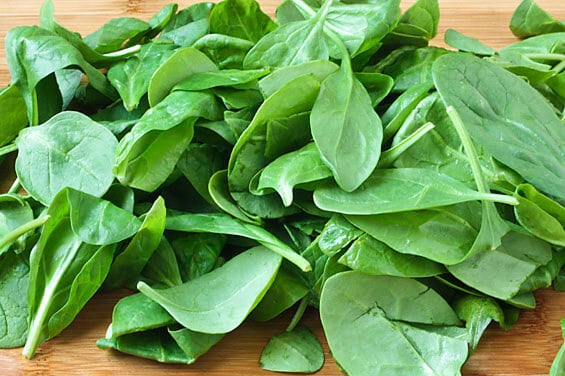
Spinach Salad with Warm Bacon Vinaigrette
Yields: 6 Servings
3 eggs
2
lbs baby spinach leaves
1 tsp sugar
6 Tbls Apple Cider Vinegar
Pinch Salt & pepper
2 Sliced Shallots
2 Cloves Garlic minced
8 slices thick cut applewood smoked bacon
Place eggs in saucepan and cover with water
and a pinch of salt. Bring to a boil and cook for 10 mins. Rinse under cold
water and let cool. Peel and cut egg into slices with an egg slicer. Chop bacon
into smaller pieces and cook in a sauté pan until crisp. Remove bacon from pan
and drain on paper towels. Do not discard the bacon fat. Combine vinegar with
sugar, salt & pepper. Saute shallots in bacon fat until light golden. Add
garlic and cook for one minute until the garlic begins to exude its aroma. Add
vinegar/sugar mix and bring to a boil. Cook for one minute and remove from
heat. Pour hot dressing over spinach leaves and toss quickly so the leaves do
not wilt. Serve with egg slices and a sprinkle of the cooked bacon bits.
Creamed Spinach
Yields: 4 Servings
2 lbs spinach, thick stems removed
3 shallots, sliced
2-3 garlic cloves, minced
2 Tbl unsalted butter
2 Tbl extra virgin olive oil
Pinch Kosher Salt and Freshly Ground Pepper
Pinch Nutmeg
1 Tbl AP Flour
¼ cup Heavy Cream
¼ Cup Grated Parmesan Cheese
Heat butter and oil in a sauté pan over medium high heat.
Add shallot and sauté until softened. Add garlic and sauté one minute or until
fragrant. Add spinach and season with salt, pepper and nutmeg. Cook uncovered
until the spinach has wilted and all the liquid has evaporated. Add flour and
sauté for a couple of minutes to cook the rawness out of the flour. Add cream
and bring to a simmer. Add parmesan and heat through to melt. Adjust seasoning
to taste.
Saturday, March 17, 2012
Messing Around
I am often asked by guests staying or dining with us if specific recipes are in my cookbook and often my answer is "kind of." Not a good answer I suppose but an honest one. I view recipes as guidelines that can be deviated from and played with. So I usually get a basic recipe that works, write it down and then mess around with it. I guess you could say I get easily bored or you could say that I like to be creative in the kitchen. Either way, the result is that I never make a recipe the same exact way twice.
Part of this involves availability of ingredients and what is fresh. Because I like to support local organic farms I often base my specific recipe on any given day on what I can get from those farms. While a recipe may call for spinach, if the farm has kale or arugula, I'll use it and find a way to make it work. Keeps things fresh and keeps me on my toes.
The other part of it is that I like to keep things new for repeat guests. We do get a lot of repeat guests and I want to keep them coming back for different and exciting things. If it is the same every time, they will get bored, so this is my opportunity to keep them guessing and keep them coming back for more.
With that in mind, this last weekend I happened to have a group of regulars coming for a special dinner party for their co-workers. I had served sausage stuffed mushrooms many times for them and others and I love my recipe but I felt like tweaking a bit. So I shook things up a bit and came up with a new version. I wouldn't necessarily say improved, just slightly different. I'll continue making both versions as they are both quite popular. Here are both recipes. Try them both, play with them and remember, keep it fresh. One of the safest places to try something new is in the kitchen. The worst that could happen is that you may not like something, but don't let that stop your creativity. Your taste buds will appreciate you.
Sausage Stuffed Mushrooms
Begin by browning the sausage with some Italian
seasoning in a medium saucepan over medium high heat for approx. 10 minutes or
until no pink remains. If the sausage is very fatty, drain before assembling.
If the sausage is only a little fatty, keep the juices as they will keep the
mushrooms moist. Cool filling completely before assembling mushrooms. Place
mushroom caps in a greased casserole and sprinkle with vermouth or sherry.
Combine sausage with cream cheese, parmesan cheese, Worcestershire sauce, salt,
pepper, garlic powder and egg. Make sure the filling is well combined. It is
easiest to use your hands for this process. Fill each mushroom cap with approx.
1 Tbl filling until all the filling has been utilized. Sprinkle each cap with
more grated parmesan. Place mushrooms in a preheated 350 degree oven and bake
approx. 25 mins or until the tops begin to turn golden. Serve hot.

Revised Sausage Stuffed Mushrooms
Yields: 12 Servings
1 lb bulk sausage
1 onion, minced
3 garlic cloves, minced
2 small sweet peppers, minced
2 tsps truffle oil
1 Tbl Herbes de Provence
1/4 cup dry sherry
Pinch freshly grated nutmeg
Pinch Freshly Ground Pepper
1 tsp anchovy paste
8 oz mascarpone
1/2 cup grated parmesan cheese
2 Tbl chopped italian parsley
2 Tbl chopped cilantro
1 egg
24 stuffer mushrooms, stems removed and peeled
Place mushrooms on baking sheet. Place sausage in saute pan and begin browning over medium high heat. Add onion and continue sauteeing until tender, approx. 5 mins. Add garlic and heat for one minute or until fragrant. Add peppers, truffle oil, herbes de provence, anchovy paste, nutmeg, pepper and wine. Cook until all the liquid has evaporated and the sausage is cooked through. Add parsley and cilantro and stir to combine. Remove from heat. Allow to cool completely. Add mascarpone and parmesan cheeses as well as egg and combine well. Fill each mushroom cap generously. Bake at 375 degrees for approx. 15-20 mins or until the filling is golden brown on top. Serve garnished with a little balsamic reduction.

Part of this involves availability of ingredients and what is fresh. Because I like to support local organic farms I often base my specific recipe on any given day on what I can get from those farms. While a recipe may call for spinach, if the farm has kale or arugula, I'll use it and find a way to make it work. Keeps things fresh and keeps me on my toes.
The other part of it is that I like to keep things new for repeat guests. We do get a lot of repeat guests and I want to keep them coming back for different and exciting things. If it is the same every time, they will get bored, so this is my opportunity to keep them guessing and keep them coming back for more.
With that in mind, this last weekend I happened to have a group of regulars coming for a special dinner party for their co-workers. I had served sausage stuffed mushrooms many times for them and others and I love my recipe but I felt like tweaking a bit. So I shook things up a bit and came up with a new version. I wouldn't necessarily say improved, just slightly different. I'll continue making both versions as they are both quite popular. Here are both recipes. Try them both, play with them and remember, keep it fresh. One of the safest places to try something new is in the kitchen. The worst that could happen is that you may not like something, but don't let that stop your creativity. Your taste buds will appreciate you.
Sausage Stuffed Mushrooms
Yields: 12 Servings
24 Stuffing Mushrooms (Stems
removed and peeled)
¼ cup vermouth or sherry
1 pound Italian Sausage
(Casings Removed)
1 Tbl Italian Seasoning
1 8 oz package cream cheese
(Room Temperature)
1/2 cup grated parmesan
cheese plus 2-3 tbls for sprinkling over top of mushrooms
1 tsp Worcestershire sauce
Pinch salt & Pepper
2 tsps garlic powder
1 egg

Revised Sausage Stuffed Mushrooms
Yields: 12 Servings
1 lb bulk sausage
1 onion, minced
3 garlic cloves, minced
2 small sweet peppers, minced
2 tsps truffle oil
1 Tbl Herbes de Provence
1/4 cup dry sherry
Pinch freshly grated nutmeg
Pinch Freshly Ground Pepper
1 tsp anchovy paste
8 oz mascarpone
1/2 cup grated parmesan cheese
2 Tbl chopped italian parsley
2 Tbl chopped cilantro
1 egg
24 stuffer mushrooms, stems removed and peeled
Place mushrooms on baking sheet. Place sausage in saute pan and begin browning over medium high heat. Add onion and continue sauteeing until tender, approx. 5 mins. Add garlic and heat for one minute or until fragrant. Add peppers, truffle oil, herbes de provence, anchovy paste, nutmeg, pepper and wine. Cook until all the liquid has evaporated and the sausage is cooked through. Add parsley and cilantro and stir to combine. Remove from heat. Allow to cool completely. Add mascarpone and parmesan cheeses as well as egg and combine well. Fill each mushroom cap generously. Bake at 375 degrees for approx. 15-20 mins or until the filling is golden brown on top. Serve garnished with a little balsamic reduction.

Monday, March 12, 2012
Celebrating St. Patrick's Day
Saint Patrick was considered to be the person who brought Christianity to Ireland. Much mythology surrounds the life of Saint Patrick, including his description of the Holy Trinity using the three leaves of the Irish clover or shamrock. He is purported to have died on March 17, 461, which is the day chosen to commemmorate his life. The holiday has been celebrated by the Irish as a feasting day for over 1000 years, but ironically the first St. Patrick's Day parade was held by Irish Americans in New York in the late 1700's. Since then, Irish and non-Irish alike have adopted the holiday and the traditional corned beef and cabbage and green beer have become a favorite in households across the US.
I myself am not Irish, although many think that with my red hair I am, but I have come to appreciate the food traditions of the holiday and enjoy the festivities. As such, every year at the Chestnut Street Inn we put together a special menu honoring the occasion. This year, we are deviating from the traditional corned beef and cabbage with an Irish Stew. We also always include a good beer and cheese soup and dessert often includes Irish Cream liqueur. Here are a couple of my favorite recipes.
Beer and Cheese Soup
Yields: Approx. 8 Servings
3 Slices Applewood Smoked Bacon, cut into chunks
1 onion, diced
3-4 garlic cloves, minced
2 carrots, peeled and diced
2 celery stalks, diced
2 lg Russett or Kennebec potatoes, peeled and diced
Pinch Kosher Salt and Freshly Ground Pepper
1 Tsp Smoked Hot Hungarian Paprika
2 Bay Leaves
2 Tbls Herbes de Provence
1 Bottle Beer (Stout or Ale)
4 Cups Kitchen Basics or Pacifica Chicken Broth
½-3/4 Cup Daisy Sour Cream
1 Cup Aged Irish or English Cheddar Cheese, grated
Cook bacon in a medium stock pot over medium heat. Remove to paper towels to allow to drain. Add onion to bacon fat and sauté until translucent, approx. 5 mins. Add garlic and sauté until fragrant approx. one minute. Add carrots, celery and potato and sauté for an additional couple of minutes. Add spices and heat for one minute. Add beer. Bring to a boil and cook, uncovered, until all the liquid has evaporated. Add chicken broth and bring to a boil. Cover and simmer on low for 45 mins. Remove bay leaves and puree with an immersion blender. Add sour cream and cheese and puree until smooth. Season to taste with salt and pepper. Serve with reserved bacon pieces and a dollop of homemade crème fraiche.

Irish Stew
Yields: Approx. 8-10 Servings
2 1/2 lbs Beef Stew Meat
2 Tbl Extra Virgin Olive Oil
1 lg onion, diced
2-3 cloves garlic, minced
1 lb baby carrots
1 lb frozen pearl onions, thawed
2 lbs baby red potatoes or dutch potatoes, washed
4 cups beef broth
Pinch Kosher Salt and Freshly ground pepper
2 bay leaves
2 Tbl Herbes de Provence
3-4 Tbl all purpose flour
Place olive oil in a large stock pot over medium high heat. Add beef and cook for approx. 5 mins to brown. Add onion and sauté for 5 mins until translucent. Add garlic and sauté for one minute until fragrant. Add carrots, onions and potatoes and season with salt, pepper, bay leaves and Herbes de Provence. Add flour and stir for approx. one minute to cook through. Add broth and bring to a boil. Cover and reduce to a simmer. Cook for approx. 2 hours, stirring occasionally and adding more liquid if needed. Adjust seasoning to taste. Serve with Daisy Sour Cream.
I myself am not Irish, although many think that with my red hair I am, but I have come to appreciate the food traditions of the holiday and enjoy the festivities. As such, every year at the Chestnut Street Inn we put together a special menu honoring the occasion. This year, we are deviating from the traditional corned beef and cabbage with an Irish Stew. We also always include a good beer and cheese soup and dessert often includes Irish Cream liqueur. Here are a couple of my favorite recipes.
Beer and Cheese Soup
Yields: Approx. 8 Servings
3 Slices Applewood Smoked Bacon, cut into chunks
1 onion, diced
3-4 garlic cloves, minced
2 carrots, peeled and diced
2 celery stalks, diced
2 lg Russett or Kennebec potatoes, peeled and diced
Pinch Kosher Salt and Freshly Ground Pepper
1 Tsp Smoked Hot Hungarian Paprika
2 Bay Leaves
2 Tbls Herbes de Provence
1 Bottle Beer (Stout or Ale)
4 Cups Kitchen Basics or Pacifica Chicken Broth
½-3/4 Cup Daisy Sour Cream
1 Cup Aged Irish or English Cheddar Cheese, grated
Cook bacon in a medium stock pot over medium heat. Remove to paper towels to allow to drain. Add onion to bacon fat and sauté until translucent, approx. 5 mins. Add garlic and sauté until fragrant approx. one minute. Add carrots, celery and potato and sauté for an additional couple of minutes. Add spices and heat for one minute. Add beer. Bring to a boil and cook, uncovered, until all the liquid has evaporated. Add chicken broth and bring to a boil. Cover and simmer on low for 45 mins. Remove bay leaves and puree with an immersion blender. Add sour cream and cheese and puree until smooth. Season to taste with salt and pepper. Serve with reserved bacon pieces and a dollop of homemade crème fraiche.

Irish Stew
Yields: Approx. 8-10 Servings
2 1/2 lbs Beef Stew Meat
2 Tbl Extra Virgin Olive Oil
1 lg onion, diced
2-3 cloves garlic, minced
1 lb baby carrots
1 lb frozen pearl onions, thawed
2 lbs baby red potatoes or dutch potatoes, washed
4 cups beef broth
Pinch Kosher Salt and Freshly ground pepper
2 bay leaves
2 Tbl Herbes de Provence
3-4 Tbl all purpose flour
Place olive oil in a large stock pot over medium high heat. Add beef and cook for approx. 5 mins to brown. Add onion and sauté for 5 mins until translucent. Add garlic and sauté for one minute until fragrant. Add carrots, onions and potatoes and season with salt, pepper, bay leaves and Herbes de Provence. Add flour and stir for approx. one minute to cook through. Add broth and bring to a boil. Cover and reduce to a simmer. Cook for approx. 2 hours, stirring occasionally and adding more liquid if needed. Adjust seasoning to taste. Serve with Daisy Sour Cream.
Friday, March 2, 2012
You May Not Care Where Your Food Comes From But I Do
It's no secret that I am passionate about food. Specifically, locally grown food. I make it a point to go out and purchase it and carefully prepare it for my guests to eat. I'm not shy about advertising it because it is something I believe in and I have found that in general guests appreciate my passion. So it came as quite a surprise last weekend when a guest who was dining with us seemed less than enthusiastic about the fact that I support local farms and serve their food. When I explained that my greens came from Indian Trails Farm in Kewanee, the butternut squash and sweet potatoes from Coneflower Farm in Tiskilwa and the eggs and meat from Meadow Haven Farm here in Sheffield, I expected the usual response, which generally is curiosity, enthusiasm and support. This gentleman said very loudly in front of an entire roomful of guests "I don't care. That does nothing for me." I could feel the others in the room sink into their chairs in a sense of deflation. And I wanted to go hide in the kitchen. Instead, I said something to the effect of "That's too bad because you are an organic being and you should care about what you are putting into your body." Perhaps a bit rude, but I felt the need to not only justify what I do but also to stand up for the farms that work so hard to grow nutritious and delicious organic foods for me to serve.
So as I say, while certain guests may not care what they put into their bodies, I do. When they dine at my restaurant I am responsible for what they eat and I take that responsibility extremely seriously. Yes, taste is the number one priority, but quality is a close second. I want to provide the freshest, most nutritious food possible whenever I can as the seasons allow. This involves several things in my eyes. First, the food should not travel thousands of miles to get to me. It should be fresh and that inherently means it cannot spend days on a semi making it's way into a grocery store where it will sit on a shelf for days before making its way onto the table. And let's be honest, I know this isn't always possible, particularly in the winter. But, some things are available year round and I can be discriminatory in terms of reading labels on foods at the grocery store and select those that have travelled the least to get to me. Secondly, I want to know how that food was grown and where it came from. I don't want to provide food that came from a foreign country where I cannot guarantee the growing practices were as regulated as they are in this country. I also want to know that when the chicken and eggs say they are free range, those chickens indeed spent time roaming the outdoors, soaking in the sunlight and didn't simply have the opportunity to go outside via one small door attached to their coop. Third, I cook from scratch as much as possible, avoiding processed foods that contain ingredients I cannot pronounce and don't recognize.
Supporting local farms isn't just a matter of quality and taste either. It is a matter of economics. I want to support Americans, but more specifically, I want to support those who are within my immediate community. Spending money locally directly benefits my local community. It keeps those dollars within our area. I can directly see the results of my relationship with those farmers in the form of say improvements they make on their farms, sending their kids to college or helping them pay for their health care. Locavorism isn't some idealistic hippie notion that only those in a commune appreciate, it is the wave of the future. Small businesses thrive when those in their communities step up and support them. They do not thrive on multi-national ad campaigns and big corporations. Our future depends upon these kinds of businesses making a go of it and being successful within their communities.
And finally, a statistic that I once heard that always sticks with me. Americans in general spend approximately 5% of their expendable incomes on food and about 25% on pharmaceuticals. These numbers are reversed in Europe where they spend approximately 25% on food and only 5% on pharmaceuticals. Europeans see the value in respecting the notion of "You Are What You Eat." This isn't just a catchy phrase. This is a motto to live by. What you put into your body has a direct correlation with what your body puts out. Eating natural, high quality food is like putting premium fuel into a car. It functions better, lasts longer and requires less care. I practice what I preach with my own body and I believe that by feeding my guests locally and naturally I am in some way nourishing their bodies, although I do give my car regular gas. Hospitality doesn't just mean being nice in my book, it means caring about my guests and feeding them the best possible quality food I can find. That's my philosophy and I'm sticking to it.

So as I say, while certain guests may not care what they put into their bodies, I do. When they dine at my restaurant I am responsible for what they eat and I take that responsibility extremely seriously. Yes, taste is the number one priority, but quality is a close second. I want to provide the freshest, most nutritious food possible whenever I can as the seasons allow. This involves several things in my eyes. First, the food should not travel thousands of miles to get to me. It should be fresh and that inherently means it cannot spend days on a semi making it's way into a grocery store where it will sit on a shelf for days before making its way onto the table. And let's be honest, I know this isn't always possible, particularly in the winter. But, some things are available year round and I can be discriminatory in terms of reading labels on foods at the grocery store and select those that have travelled the least to get to me. Secondly, I want to know how that food was grown and where it came from. I don't want to provide food that came from a foreign country where I cannot guarantee the growing practices were as regulated as they are in this country. I also want to know that when the chicken and eggs say they are free range, those chickens indeed spent time roaming the outdoors, soaking in the sunlight and didn't simply have the opportunity to go outside via one small door attached to their coop. Third, I cook from scratch as much as possible, avoiding processed foods that contain ingredients I cannot pronounce and don't recognize.
Supporting local farms isn't just a matter of quality and taste either. It is a matter of economics. I want to support Americans, but more specifically, I want to support those who are within my immediate community. Spending money locally directly benefits my local community. It keeps those dollars within our area. I can directly see the results of my relationship with those farmers in the form of say improvements they make on their farms, sending their kids to college or helping them pay for their health care. Locavorism isn't some idealistic hippie notion that only those in a commune appreciate, it is the wave of the future. Small businesses thrive when those in their communities step up and support them. They do not thrive on multi-national ad campaigns and big corporations. Our future depends upon these kinds of businesses making a go of it and being successful within their communities.
And finally, a statistic that I once heard that always sticks with me. Americans in general spend approximately 5% of their expendable incomes on food and about 25% on pharmaceuticals. These numbers are reversed in Europe where they spend approximately 25% on food and only 5% on pharmaceuticals. Europeans see the value in respecting the notion of "You Are What You Eat." This isn't just a catchy phrase. This is a motto to live by. What you put into your body has a direct correlation with what your body puts out. Eating natural, high quality food is like putting premium fuel into a car. It functions better, lasts longer and requires less care. I practice what I preach with my own body and I believe that by feeding my guests locally and naturally I am in some way nourishing their bodies, although I do give my car regular gas. Hospitality doesn't just mean being nice in my book, it means caring about my guests and feeding them the best possible quality food I can find. That's my philosophy and I'm sticking to it.
Subscribe to:
Posts (Atom)