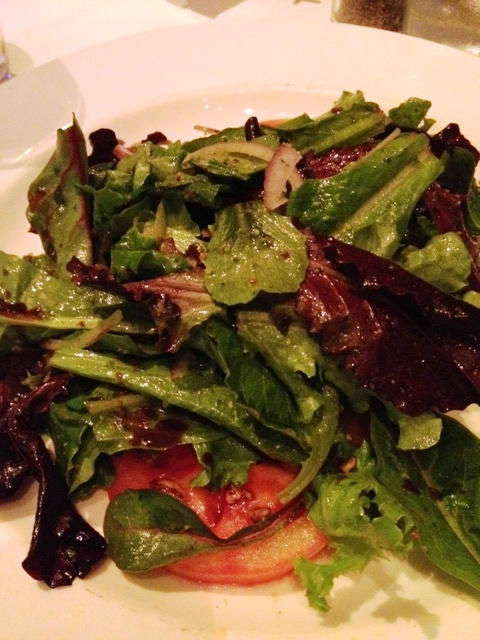
Perhaps one of my favorite mediterranean condiments is balsamic vinegar. Vinegar in general, whether balsamic, wine, apple cider or other flavored vinegar, is a wonderful flavor additive. It's acidity is particularly great at cutting through fat and at complementing strong spices. The main component of salad dressings, vinegar can also give vegetables flavor and alter their texture. One of the best mediterranean salads in my book is a Mozzarella Caprese. Fresh mozzarella, ripe tomatoes, hand torn basil and a hint of olive oil and balsamic vinegar. So simple, yet so complex. BUT, and here's the rub, not all vinegars are alike. This salad truly is contingent on a high quality balsamic vinegar. But how do you know if a balsamic vinegar is high quality or not?? Well, there are a few things to look for.
First, a note on how balsamic vinegar is made. First grapes are pressed into a juice that is then boiled down and the concentrated juice is subsequently fermented. The strength and grade of the balsamic is determined by how long the vinegar has been aged. Traditional balsamic vinegars from Modena are rare and quite expensive. However, there are many domestic varieties and other commercially manufactured varieties that come from all over the world. Many are actually made by adding colorings and flavorings to wine vinegars to ressemble the complex flavor of a true balsamico from Modena.
OK, so what does that mean when you are shopping at the store, looking for a balsamic vinegar. The main thing I look for with balsamic vinegar regardless of what the label says is not necessarily where it came from and how long it says it has been aged. I check it's color or clarity and it's viscosity or thickness. I like a balsamic that is very dark in color and very viscous, almost the texture of molasses or a thick maple syrup. One of my personal favorites is a 25 year aged organic balsamic vinegar that I found at the Olive Mill, which is a chain that can be found in various boutique stores across the country. They offer flavored vinegars and vinegars of all kinds. The beauty of it is that you can actually taste and see the vinegar before purchasing.
Unlike perhaps wine or olive oil, in the case of balsamic vinegar, price DOES matter. The more you are willing to spend, the higher the quality of vinegar you are going to get. BUT, with that said, don't worry, there are some techniques you can use to maximize the flavor of a mediocre balsamic vinegar and still end up with a delicious salad. How do you do this?? Reduce, reduce, reduce.
Take an ordinary, run of the mill balsamic vinegar. Pour the contents of the entire bottle into a saucepan. Bring the liquid to a boil. Stand back because the fumes from the vinegar can knock you off your feet! Reduce the heat to a simmer and let the vinegar reduce until only half or 1/3 of the vinegar is left in the saucepan. What you are looking for is that the vinegar coats the bottom of the pan when you tilt it and slowly slides down. Remove from the heat and allow to cool completely before using. Transfer to a squirt bottle and use just like you would use vinegar for dressing or for dipping. This reduction will be thick, sweet and unctuous. Not only is it great as an ingredient, but it is a beautiful garnish, making lovely swirls and drizzles on any plate. The vinegar is a natural preservative so it will keep for a long time at room temperature no need to refrigerate.
And don't shy away from some of the flavored balsamic vinegars you see. I know they aren't traditional, but they are great for salad dressings. Personal favorites are raspberry basamic and fig balsamic. I don't reduce these, but use them in salads because they completely change the dressing simply by changing the flavor of the vinegar with the same basic recipe, 1/4 cup extra virgin olive oil, 1 Tbl vinegar, 1 Tbl White Wine, 1 Tbl Honey and 1 Tbl Dijon Mustard. Season with a pinch of salt and pepper and off you go. This can be multiplied easily and keeps well in a tightly sealed tupperware in the fridge for up to two weeks. Enjoy!!
Tuesday, November 10, 2009
Make It Mediterranean, Make It Fresh Part 6-Vinegar
Labels:
Balsamic Vinegar,
Mediterranean Diet,
Vinegar
Tuesday, October 27, 2009
Make It Mediterranean, Make It Fresh Part 5-The Skinny on Fat
Lets be honest, in the US, fat is a bad 3 letter word. Every day grocery stores add new and improved low fat, reduced fat and fat free products designed to improve our overall health and reduce our waistlines. Now, I don't know about you, but it seems to me that there are more over weight people in this country today, with the advent of all these lower fat options then 100 years ago when people cooked with butter, lard and ate bacon like it was going out of style. Fat isn't a bad word, nor is it bad for you. The key is which fats you are using and how much.
I recently read an article in a cooking magazine discussing the nutritional differences between olive oil, butter, margarine, shortening and lard. Bottom line between them wasn't calories, but rather cholesterol and saturated versus unsaturated fats. Those fats containing higher levels of unsaturated to saturated fats, like olive oil, which happens to be higher in calories per serving than butter for example, were considered to be far healthier than those with higher proportions of saturated fats. The second key here is quantity. Looking at serving size is important. People tend to forget the serving sizes when they see something has fewer calories in it for example and just indulge in a lot more of it, assuming that if it is healthier they can eat more of it.
So, how does this relate to the Mediterranean diet. Well, most of the countries surrounding the mediterranean use both butter and olive oil, but overall, olive oil is the predominant fat of choice. But how do you pick a good quality olive oil?? What is the difference between extra virgin, virgin and light?? Does higher price really equal better quality?? These are all questions I get on a regular basis when teaching cooking classes and that I will demystify right here.
First of all, a distinction should be made between virgin and refined oils. Virgin oils are made without the use of chemical treatment and therefore considered to be superior. The second level of classification is based on level of acidity in the oil. Extra-Virgin oils should have the lowest acidity, 0.8% or lower. Next is Virgin, which generally has no more than 2% acidity. Light olive oils are usually refined oils that are less flavorful and pure olive oils are often a combination of both refined and virgin oils. Olive oil in general is filtered after it is pressed to remove any impurities and reduce the cloudiness of the oil.
Because olive oil has a low burn point, it has a tendency to not work particularly well for frying, although it is suggested that refined oils are perhaps a better choice for frying than virgin oils. It is also suggested that light oils are good for salad dressings because of their more neutral flavor. In my humble opinion, I opt to always use extra-virgin olive oil for dressings, sauteeing and every other purpose. I generally opt for an olive oil that is subtle in flavor and tend to look for oils that come from Italy. Having sampled oils from all over the world, many of the oils I have tasted, those from Greece, Morocco and the Middle East were often less filtered and therefore had a much stronger olive flavor. For cooking this is not a problem, but for dressings it can be over powering. To simplify things in my kitchen, which is pretty small, I keep one kind of extra-virgin olive oil on hand and try to keep it in a solid container rather than a clear one. You should use oil within a year of purchase as oils will go rancid just as nuts and spices do.
Something I tend to do frequently to help cut back on fat and still keep some of the flavor is to take a recipe calling for butter, margarine, shortening or another kind of oil that is higher in saturated fat is to use half and half. By substituting even part of the fat for olive oil you are reducing your trans and saturated fat intake, not to mention the fact that olive oil does have a distinct and delicious flavor that can add a remarkable depth to a dish. Just because a recipe isn't necessarily mediterranean in origin, give olive oil a try. And don't be afraid to sample olive oils.
One of the best experiences I ever had with olive oil early on in my cooking career was an olive oil tasting. We took small samples of numerous types of olive oils, flavored, unflavored, virgin, refined, extra-virgin, you name it. Not unlike a wine tasting, the oils all had distinct flavors that were dependent upon where the oils came from and where the olives were grown. Like grapes, the olives embodied many of the flavors of the terroir or soils/region they grew in and gave the oils a unique flavor profile. You can truly learn to appreciate the versatility of olive oil through one of these tastings. If you are ever in a situation to try one, go for it. It may sound strange to slurp a bunch of fat, but it is an eye opening experience and one that will truly change your taste buds and your palatte for the better.
I recently read an article in a cooking magazine discussing the nutritional differences between olive oil, butter, margarine, shortening and lard. Bottom line between them wasn't calories, but rather cholesterol and saturated versus unsaturated fats. Those fats containing higher levels of unsaturated to saturated fats, like olive oil, which happens to be higher in calories per serving than butter for example, were considered to be far healthier than those with higher proportions of saturated fats. The second key here is quantity. Looking at serving size is important. People tend to forget the serving sizes when they see something has fewer calories in it for example and just indulge in a lot more of it, assuming that if it is healthier they can eat more of it.
So, how does this relate to the Mediterranean diet. Well, most of the countries surrounding the mediterranean use both butter and olive oil, but overall, olive oil is the predominant fat of choice. But how do you pick a good quality olive oil?? What is the difference between extra virgin, virgin and light?? Does higher price really equal better quality?? These are all questions I get on a regular basis when teaching cooking classes and that I will demystify right here.
First of all, a distinction should be made between virgin and refined oils. Virgin oils are made without the use of chemical treatment and therefore considered to be superior. The second level of classification is based on level of acidity in the oil. Extra-Virgin oils should have the lowest acidity, 0.8% or lower. Next is Virgin, which generally has no more than 2% acidity. Light olive oils are usually refined oils that are less flavorful and pure olive oils are often a combination of both refined and virgin oils. Olive oil in general is filtered after it is pressed to remove any impurities and reduce the cloudiness of the oil.
Because olive oil has a low burn point, it has a tendency to not work particularly well for frying, although it is suggested that refined oils are perhaps a better choice for frying than virgin oils. It is also suggested that light oils are good for salad dressings because of their more neutral flavor. In my humble opinion, I opt to always use extra-virgin olive oil for dressings, sauteeing and every other purpose. I generally opt for an olive oil that is subtle in flavor and tend to look for oils that come from Italy. Having sampled oils from all over the world, many of the oils I have tasted, those from Greece, Morocco and the Middle East were often less filtered and therefore had a much stronger olive flavor. For cooking this is not a problem, but for dressings it can be over powering. To simplify things in my kitchen, which is pretty small, I keep one kind of extra-virgin olive oil on hand and try to keep it in a solid container rather than a clear one. You should use oil within a year of purchase as oils will go rancid just as nuts and spices do.
Something I tend to do frequently to help cut back on fat and still keep some of the flavor is to take a recipe calling for butter, margarine, shortening or another kind of oil that is higher in saturated fat is to use half and half. By substituting even part of the fat for olive oil you are reducing your trans and saturated fat intake, not to mention the fact that olive oil does have a distinct and delicious flavor that can add a remarkable depth to a dish. Just because a recipe isn't necessarily mediterranean in origin, give olive oil a try. And don't be afraid to sample olive oils.
One of the best experiences I ever had with olive oil early on in my cooking career was an olive oil tasting. We took small samples of numerous types of olive oils, flavored, unflavored, virgin, refined, extra-virgin, you name it. Not unlike a wine tasting, the oils all had distinct flavors that were dependent upon where the oils came from and where the olives were grown. Like grapes, the olives embodied many of the flavors of the terroir or soils/region they grew in and gave the oils a unique flavor profile. You can truly learn to appreciate the versatility of olive oil through one of these tastings. If you are ever in a situation to try one, go for it. It may sound strange to slurp a bunch of fat, but it is an eye opening experience and one that will truly change your taste buds and your palatte for the better.
Saturday, October 3, 2009
Make It Mediterranean, Make It Fresh Part 4-The Protein Factor
Lets face it, for most Americans, a meal wouldn't be a meal without some kind of meat on the plate, whether it's beef, lamb, chicken or pork. We are carnivores and proud of it. I love meat, but what I've learned from my experiences in the Mediterranean is that I don't need that much of it to be satisfied. Most cultures in the Mediterranean eat meat more as a luxury item, not as a pre-requisite to every meal. Some meals may be completely vegetarian, while others rely mostly on freshly caught seafood and fish. A hearty hunk of meat isn't a frequent occurrance mostly because of cost. Most families just cannot afford to feed themselves meat at every meal. What's more, most of them rely on the cuts you or I would never think to consume. Everything from organ meats to brains to hooves to trotters. These cultures have mastered the art of cooking these "off" cuts and making them intensely flavorful without much fanfare. And when meat is available, they don't eat much of it. 4 oz is standard, where we notoriously order 10 to 24 oz steaks at a high end steak restaurant. In the cases where meat isn't available at all, mediterranean cultures have gotten very clever about incorporating beans and other forms of proteins into their diets. I don't think you could survive without chickpeas, fava beans or lentils in the Mediterranean. Not only are these pulses high in protein, but incredibly rich in fiber and flavor when cooked properly.
So, how to incorporate this into our western diets?? I don't suggest you give up meat altogether. I know I love a good steak on occasion. But save it for a special occasion. Learn to cut back on your portions and start using alternative proteins when you are eating your daily meals. When possible, incorporate fish into your diet. Look for fish like salmon, which is high in omega 3 fatty acids shown to help lower bad cholesterol, and don't forget to eat the skin. It is healthy, crispy and delicious. Tuna is also a great source of these nutrients and is cost-effective and versatile. Finally, don't think that the only way you can possibly consume beans is in a bean salad or chili. These guys are versatile little power houses that can really add flavor and texture to almost any dish. I like to make a salad using cooked bulgur wheat (tabbouli), use 1 cup bulgur to 2 cups hot water and let sit to cook for an hour, and an assortment of beans, including kidney, cannelini and garbanzo or chickpeas. I add whatever kind of veggies I have on hand, such as tomatoes, cucumbers, peppers and spring onions, season with salt, pepper, cumin and paprika and add some freshly chopped parsley, cilantro and mint. Dress with extra virgin olive oil and lemon juice to taste and voila. A delicious, healthy salad that will fill you up for lunch without the meat and it keeps wonderfully. Make a big batch at the beginning of the week and let it sit in the fridge. The longer it sits, the better the flavor. And, since it doesn't use a mayo based dressing, it is great for parties. To spruce it up, just top it with some crumbled feta or goat cheese. Both cheeses are packed with flavor so a little goes a long way. And if you happen to be lactose intolerant, most of these people can handle goat cheese so load up. For a great gluten free option, substitute the bulgur wheat with quinoa, a delicious and super healthy relative to spinach and tumbleweed, which cooks just like rice and tastes wonderful. So what have we learned so far, use spices and herbs to spruce up the flavor of your dishes instead of fat, take advantage of locally available ingredients like farm fresh vegetables and eggs, and cut back on your meat intake, incorporating more fish and other foods high in protein like beans and other pulses. Now you are well on your way to eating the mediterranean way.
Sunday, September 27, 2009
Make It Mediterranean, Make It Fresh Part 3-Eating Locally
Eating locally is the Make It Fresh part of the title for this series. It cannot be understated. What sets most Mediterranean cultures apart from us is the use of fresh, locally available, seasonal resources. The concept of a mass merchandiser that has everything you are looking for in one stop is unheard of in many cultures. You don't decide on what you are making for dinner and then run to the local Walmart Superstore to get everything you need. Your daily meals are dictated by what you find at the market that morning.
Think about it. Most of what we buy at the store comes from somewhere else. Lets factor in how long it took to get here, how much it cost to get it here and how many pesticides, herbicides, fungicides and other chemicals were used in the preservation of the items we are purchasing so that they still look palatable. All of a sudden, our instant gratification, fast food lifestyle doesn't seem particularly appealing does it. Substitute that with freshly picked produce that came from a local farm, farm fresh eggs that were collected this morning, fish that has been caught this morning, locally produced wine and cheese, all at an affordable price. Sounds pretty good doesn't it.
In France, Italy, Spain, Morocco, Greece, all over the Mediterranean, a trip to the local market for food is a daily pleasure. That's not to say larger grocery stores don't exist, particularly in bigger cities, but in general, the local market is where most people find what they will be eating on any given day. When I spent 6 months in Paris studying for my Bachelor's Degree in French at the Sorbonne, I would pass by the local market on my way to school every day. I was taken aback by the colors, smells and tastes of the produce, cheeses and other items being sold there. I couldn't believe how fragrant a tomato could be when it was freshly picked or how pungent a fresh goat cheese could be. I had the same unique pleasure in Morocco and in Italy. Market after market, loaded with fresh ingredients of all kinds. It was eye opening and really changed my perspective of what good food really is.
For example, it wasn't unheard of in Morocco for someone to actually buy a live chicken in the market and then bring it home and feed it a specific diet depending upon what kind of dish that chicken would eventually be cooked in. I heard arguments about how one shopkeeper fed his chicken grain to fatten it, while another fed it parsley and cilantro so it would have the flavor of the parsley and cilantro he was using in his stew, even if it gave the meat a slightly greenish hue. The point being they were so passionate about what they were eating that they made sure to take the time not only to get the freshest chickens, but to treat them in such a way as to maximize their flavor. No pre-butchered, pretty plastic wrapped cut pieces in a refrigerator or freezer.
Now, I'm not suggesting that you should never shop at a grocery store again. There is a time and place for everything. What I am suggesting is that we maybe pay a little more attention to what we can find locally. If I can get farm fresh eggs within a 5 mile radius and Walmart is 15 miles away, doesn't it make more sense to go to the farm and get some fresh eggs?? Or if the Farmer's Market and Walmart are both equidistant, which in Princeton they are, doesn't it make sense to go to the market to pick up my produce, knowing that it was all picked fresh and grown locally, then to Walmart where I can't guarantee when it was picked and where it was grown and how long it took to get there. All of this is just good common sense. Your food will taste better and you will be supporting your local economy.
Mediterranean cuisine isn't something unreachable. It is very accessible simply through changing a few basic habits. Begin with stocking your spice cabinet with the basic spices of the region as we discussed in Part 2 of this series and then start looking at what you can find fresh and local. Then you are well on your way to adopting the basic tenets of the Mediterranean Diet.
For locally available resources, contact me and I'll send you a list of all of the farms locally that can offer you practically anything you need from meat, eggs and produce to herbs, spices and bread. Call at 815-454-2419 or email me at monikaandjeff@chestnut-inn.com or you can log onto www.localharvest.org to find out what is available in your area.
Think about it. Most of what we buy at the store comes from somewhere else. Lets factor in how long it took to get here, how much it cost to get it here and how many pesticides, herbicides, fungicides and other chemicals were used in the preservation of the items we are purchasing so that they still look palatable. All of a sudden, our instant gratification, fast food lifestyle doesn't seem particularly appealing does it. Substitute that with freshly picked produce that came from a local farm, farm fresh eggs that were collected this morning, fish that has been caught this morning, locally produced wine and cheese, all at an affordable price. Sounds pretty good doesn't it.
In France, Italy, Spain, Morocco, Greece, all over the Mediterranean, a trip to the local market for food is a daily pleasure. That's not to say larger grocery stores don't exist, particularly in bigger cities, but in general, the local market is where most people find what they will be eating on any given day. When I spent 6 months in Paris studying for my Bachelor's Degree in French at the Sorbonne, I would pass by the local market on my way to school every day. I was taken aback by the colors, smells and tastes of the produce, cheeses and other items being sold there. I couldn't believe how fragrant a tomato could be when it was freshly picked or how pungent a fresh goat cheese could be. I had the same unique pleasure in Morocco and in Italy. Market after market, loaded with fresh ingredients of all kinds. It was eye opening and really changed my perspective of what good food really is.
For example, it wasn't unheard of in Morocco for someone to actually buy a live chicken in the market and then bring it home and feed it a specific diet depending upon what kind of dish that chicken would eventually be cooked in. I heard arguments about how one shopkeeper fed his chicken grain to fatten it, while another fed it parsley and cilantro so it would have the flavor of the parsley and cilantro he was using in his stew, even if it gave the meat a slightly greenish hue. The point being they were so passionate about what they were eating that they made sure to take the time not only to get the freshest chickens, but to treat them in such a way as to maximize their flavor. No pre-butchered, pretty plastic wrapped cut pieces in a refrigerator or freezer.
Now, I'm not suggesting that you should never shop at a grocery store again. There is a time and place for everything. What I am suggesting is that we maybe pay a little more attention to what we can find locally. If I can get farm fresh eggs within a 5 mile radius and Walmart is 15 miles away, doesn't it make more sense to go to the farm and get some fresh eggs?? Or if the Farmer's Market and Walmart are both equidistant, which in Princeton they are, doesn't it make sense to go to the market to pick up my produce, knowing that it was all picked fresh and grown locally, then to Walmart where I can't guarantee when it was picked and where it was grown and how long it took to get there. All of this is just good common sense. Your food will taste better and you will be supporting your local economy.
Mediterranean cuisine isn't something unreachable. It is very accessible simply through changing a few basic habits. Begin with stocking your spice cabinet with the basic spices of the region as we discussed in Part 2 of this series and then start looking at what you can find fresh and local. Then you are well on your way to adopting the basic tenets of the Mediterranean Diet.
For locally available resources, contact me and I'll send you a list of all of the farms locally that can offer you practically anything you need from meat, eggs and produce to herbs, spices and bread. Call at 815-454-2419 or email me at monikaandjeff@chestnut-inn.com or you can log onto www.localharvest.org to find out what is available in your area.
Labels:
Farmers Market,
Locavorism,
Mediterranean Diet
Tuesday, September 22, 2009
Make It Mediterranean, Make It Fresh Part 2-Spices
One of the truly great pleasures of Mediterranean cuisine is the degree to which you eat with all of your senses. The single biggest aspect of this is the aggressive use of spices in these cultures. While most of the foods in Spain, France, Italy, Greece, Morocco and others are not inherently spicy per se, they are loaded with spices of all kinds and they aren't shy about applying them to their dishes. As a dish is brought in front of you, the first thing you notice is the wafting aroma from the dish that dances in your nose, preparing your taste buds for what they are about to experience. The spices are not only complex, but these cultures have mastered the art of combining spices you wouldn't traditionally expect to see together and in conjunction with meat for example. It isn't uncommon to pair traditionally "sweet" spices, like cinnamon and ginger, with chicken or lamb, adding a hint of dried fruit to create an unctuous sauce that is to die for.
Yet the use of spices in these cultures goes far beyond the food itself. One of the most profoud experiences I had in Morocco was in a spice shop in the souks of ancient Fez. The two hours I spent there were eye opening in the degree to which it showed me that every spice has not only a culinary purpose, but a medicinal one as well. People in these cultures truly eat for their taste buds and their health. The following are a few samples of what I learned that day.
Cumin, which is delightful with vegetables, meat and fish, is actually a powerful aid for intestinal discomfort. A teaspoon dissolved in a cup of water will cure any stomach ailment.
Saffron, which is the highly prized stamen of a crocus flower, and very expensive, is a wonderful immunological booster. A cream is often manufactured out of saffron which is used for skin irritations and acne.
Ginseng, also known as the Mandrake, is a common supplement that can aid in promoting circulation, hindering depression and helping against dizziness. Can often be steeped in hot water to make a soothing tea.
Nigella or Sativa, is a wonderful spice for headaches, migraines, colds and asthma. We took some of this and placed it in a tissue. Then we rubbed the tissue along with the seeds in the palm of our hand and inhaled. What resulted was nasal clearing sensation that actually re-energized us. These seeds are often used in baking as a subtle flavoring.
And the list goes on, cinnamon, ginger, paprika, cayenne pepper, all of these spices have alternate purposes ranging from digestion to circulation and overall health.
Many of these spices can be found at gourmet food markets, such as World Gourmet Foods in Bloomington, IL. You can also find them on various websites such as www.igourmet.com and www.zamourispices.com. Learning to incorporate them into your cooking will not only make your food taste wonderful, but may offer other potential health benefits. And if nothing else, using more spices in your cooking is a wonderful way of cutting out fat and sugar, which as we all know is healthier for us. Note: Spices begin to lose much of their flavor after 6 months. Purchase them in smaller amounts more frequently and keep them in a cool dry place in an airtight container for maximum shelf life.
Yet the use of spices in these cultures goes far beyond the food itself. One of the most profoud experiences I had in Morocco was in a spice shop in the souks of ancient Fez. The two hours I spent there were eye opening in the degree to which it showed me that every spice has not only a culinary purpose, but a medicinal one as well. People in these cultures truly eat for their taste buds and their health. The following are a few samples of what I learned that day.
Cumin, which is delightful with vegetables, meat and fish, is actually a powerful aid for intestinal discomfort. A teaspoon dissolved in a cup of water will cure any stomach ailment.
Saffron, which is the highly prized stamen of a crocus flower, and very expensive, is a wonderful immunological booster. A cream is often manufactured out of saffron which is used for skin irritations and acne.
Ginseng, also known as the Mandrake, is a common supplement that can aid in promoting circulation, hindering depression and helping against dizziness. Can often be steeped in hot water to make a soothing tea.
Nigella or Sativa, is a wonderful spice for headaches, migraines, colds and asthma. We took some of this and placed it in a tissue. Then we rubbed the tissue along with the seeds in the palm of our hand and inhaled. What resulted was nasal clearing sensation that actually re-energized us. These seeds are often used in baking as a subtle flavoring.
And the list goes on, cinnamon, ginger, paprika, cayenne pepper, all of these spices have alternate purposes ranging from digestion to circulation and overall health.
Many of these spices can be found at gourmet food markets, such as World Gourmet Foods in Bloomington, IL. You can also find them on various websites such as www.igourmet.com and www.zamourispices.com. Learning to incorporate them into your cooking will not only make your food taste wonderful, but may offer other potential health benefits. And if nothing else, using more spices in your cooking is a wonderful way of cutting out fat and sugar, which as we all know is healthier for us. Note: Spices begin to lose much of their flavor after 6 months. Purchase them in smaller amounts more frequently and keep them in a cool dry place in an airtight container for maximum shelf life.
Sunday, September 13, 2009
Make It Mediterranean, Make It Fresh
Most of you know that I love mediterranean cuisine and cook it here at the inn frequently. But what is mediterranean cuisine, why is it special and how can you recreate it at home. First of all, the countries surrounding the mediterranean are all countries that have very distinctive food cultures that vary regionally, taking advantage of locally available, seasonal resources. Spain, France, Italy, Greece, Morocco, Tunisia, Algeria, in all of these countries people live to eat. Don't be mistaken, people don't live in wealth, luxury and abundance, but rather they relish every meal they have and enjoy it with ultimate pleasure. Food here isn't eaten simply for survival, consumption is social and represents centuries of tradition that has been passed down from one generation to the next. It is all too common for people in these countries to be planning their next meal as they enjoy their current meal, fantasizing about the incredible produce or meat they may have found at the marketplace that very morning. The concept of fast food and supersized foods is foreign. As is the concept of sitting in front of the television eating off of a little tray while shoveling food into your mouth. You take the time to eat, enjoying the experience with others and appreciating the care that was taken in the preparation of what you are eating.
Most of these cultures utilize healthy oils, like olive, grapeseed and argan oils, which are low in cholesterol and high in omega 3 fatty acids. They also tend to eat more vegetables and less meat and have mastered the art of coaxing maximum flavor out of every part of the vegetable as well as every part of an animal, prime cut or offal. Nothing goes to waste and everything is sublime. The use of fresh herbs and spices is also critical in all of these cultures. It isn't merely a method of cooking, but an artform. Perhaps the most incredible moment I spent in Morocco was in a spice shop where I learned not only what spices to use to spice what dishes, but how each and every spice had a medicinal purpose and people here really knew how to eat for their health and enjoyment. It was eye opening to say the least.
In the next few postings I would like to expand on Mediterranean cuisine of all kinds and discuss specific elements of what makes this region unique and uniquely delicious. I'll also focus on how to incorporate some of these ideas into your own cooking, adapting it to your own lifestyles and to the areas you live in. Just because you live in a big city, doesn't mean you cannot enjoy locally produced meats, eggs and vegetables. And for those of you in a rural area where most people are used to a real meat and potatoes lifestyle, I'll show you how you can apply mediterranean concepts to your routine and begin to expand your culinary horizons. Make it Mediterranean, Make it Fresh isn't a gimmick, it is a statement encompassing the essence of how the cultures of the mediterranean eat. Eat fresh, eat local, and by all means enjoy what you consume by sharing it with others. I think we can all stand to learn something from this philosophy and it would certainly improve our quality of living drastically.
Most of these cultures utilize healthy oils, like olive, grapeseed and argan oils, which are low in cholesterol and high in omega 3 fatty acids. They also tend to eat more vegetables and less meat and have mastered the art of coaxing maximum flavor out of every part of the vegetable as well as every part of an animal, prime cut or offal. Nothing goes to waste and everything is sublime. The use of fresh herbs and spices is also critical in all of these cultures. It isn't merely a method of cooking, but an artform. Perhaps the most incredible moment I spent in Morocco was in a spice shop where I learned not only what spices to use to spice what dishes, but how each and every spice had a medicinal purpose and people here really knew how to eat for their health and enjoyment. It was eye opening to say the least.
In the next few postings I would like to expand on Mediterranean cuisine of all kinds and discuss specific elements of what makes this region unique and uniquely delicious. I'll also focus on how to incorporate some of these ideas into your own cooking, adapting it to your own lifestyles and to the areas you live in. Just because you live in a big city, doesn't mean you cannot enjoy locally produced meats, eggs and vegetables. And for those of you in a rural area where most people are used to a real meat and potatoes lifestyle, I'll show you how you can apply mediterranean concepts to your routine and begin to expand your culinary horizons. Make it Mediterranean, Make it Fresh isn't a gimmick, it is a statement encompassing the essence of how the cultures of the mediterranean eat. Eat fresh, eat local, and by all means enjoy what you consume by sharing it with others. I think we can all stand to learn something from this philosophy and it would certainly improve our quality of living drastically.
Labels:
Locavorism,
Mediterranean Cooking,
Seasonal Produce
Monday, August 31, 2009
Gourmet Night
Join us for our special 6 course gourmet taster menu on September 18 & 20, 2009 at 6:30pm. Menu will include all non-alcoholic beverages and home baked bread. Cost is $50 per person plus tax, dinner only, or $70 per person plus tax with wine pairings.
Menu is as follows:
Amuse Bouche-Moroccan Spiced Seared Sea Scallop with Orange and Olive Salad
First Course-Artisanal French Cheeses
Second Course-Smoked Salmon Blini with Caviar and Creme Fraiche
Third Course-Porcini, Chantrelle & Cremini Mushroom Bisque
Palatte Cleanser-Homemade Peach Sorbet
Entree-Pan Seared Cornish Game Hen with Pork and Orange Reduction and Caramelized Leek & Goat Cheese Twice Baked Potatoes
Dessert-Mexican Spiced Mousse au Chocolate
Reservations Required. Call 815-454-2419 or email us at monikaandjeff@chestnut-inn.com.
Menu is as follows:
Amuse Bouche-Moroccan Spiced Seared Sea Scallop with Orange and Olive Salad
First Course-Artisanal French Cheeses
Second Course-Smoked Salmon Blini with Caviar and Creme Fraiche
Third Course-Porcini, Chantrelle & Cremini Mushroom Bisque
Palatte Cleanser-Homemade Peach Sorbet
Entree-Pan Seared Cornish Game Hen with Pork and Orange Reduction and Caramelized Leek & Goat Cheese Twice Baked Potatoes
Dessert-Mexican Spiced Mousse au Chocolate
Reservations Required. Call 815-454-2419 or email us at monikaandjeff@chestnut-inn.com.
Subscribe to:
Posts (Atom)